
Water Care Guide
Why Is My Hot Tub Foaming?
Foam in a hot tub comes from one of four distinct causes, and they don't all get fixed the same way: body oils and detergent residue whipped up by the jets, low calcium hardness making the water naturally foamier, water that's simply old and saturated, or the deliberate foam a professional line purge produces on purpose. Most home foam is the first one. If you're staring at foam because we just told you we're purging your plumbing, that one's supposed to happen.
Published July 18, 2026 · Reviewed by Hot Tub Shine.
What's actually causing it
Four different foams — and defoamer only masks one of them.
1. Body-product and detergent foam (the most common cause). Lotions, deodorant, hair products, and — especially — laundry detergent residue left in swimsuits get whipped into suds by the jets. A trace of dish soap or laundry detergent is disproportionately powerful here: even a small amount at 100°F+ with jet agitation produces foam far out of proportion to how little product is actually in the water.
2. Low-calcium foam. Water that's too soft (calcium hardness below the ideal range — 150–250 ppm on a standard tub, 25–75 ppm on a FreshWater Salt system) foams more easily and can also feel slightly corrosive to the shell and equipment over time. This is a chemistry-balance cause, not a cleanliness one — you can have spotless habits and still get low-calcium foam.
3. Old-water foam. Past a certain point, water simply becomes saturated with dissolved organic material — the same accumulation that eventually causes permanent cloudiness (see Why Is My Hot Tub Water Cloudy?) can also make it foam more readily. No chemical reverses saturation; this version keeps coming back no matter what you shock it with.
4. Purge foam (not a problem — it's the point). During a professional line purge — the deep-clean step that pulls biofilm out of the plumbing before a drain & fill — foam is the expected, visible sign that the treatment is working. It looks alarming, but it's being drained away, not something you're meant to fix in your own water. See the real example below.
Why defoamer only masks the cause. A capful of defoamer collapses existing bubbles by breaking surface tension — it does nothing to the oils, low calcium, or saturated water actually producing them. It buys a day or two of clear-looking water while the underlying cause keeps building. Treat it as a stopgap before a real fix, never as the fix itself.
See what this looks like
What ordinary foam looks like.
No real Hot Tub Shine photo of detergent or low-calcium foam exists yet in our gallery — this illustration stands in for it honestly rather than stretching an unrelated photo to fit.
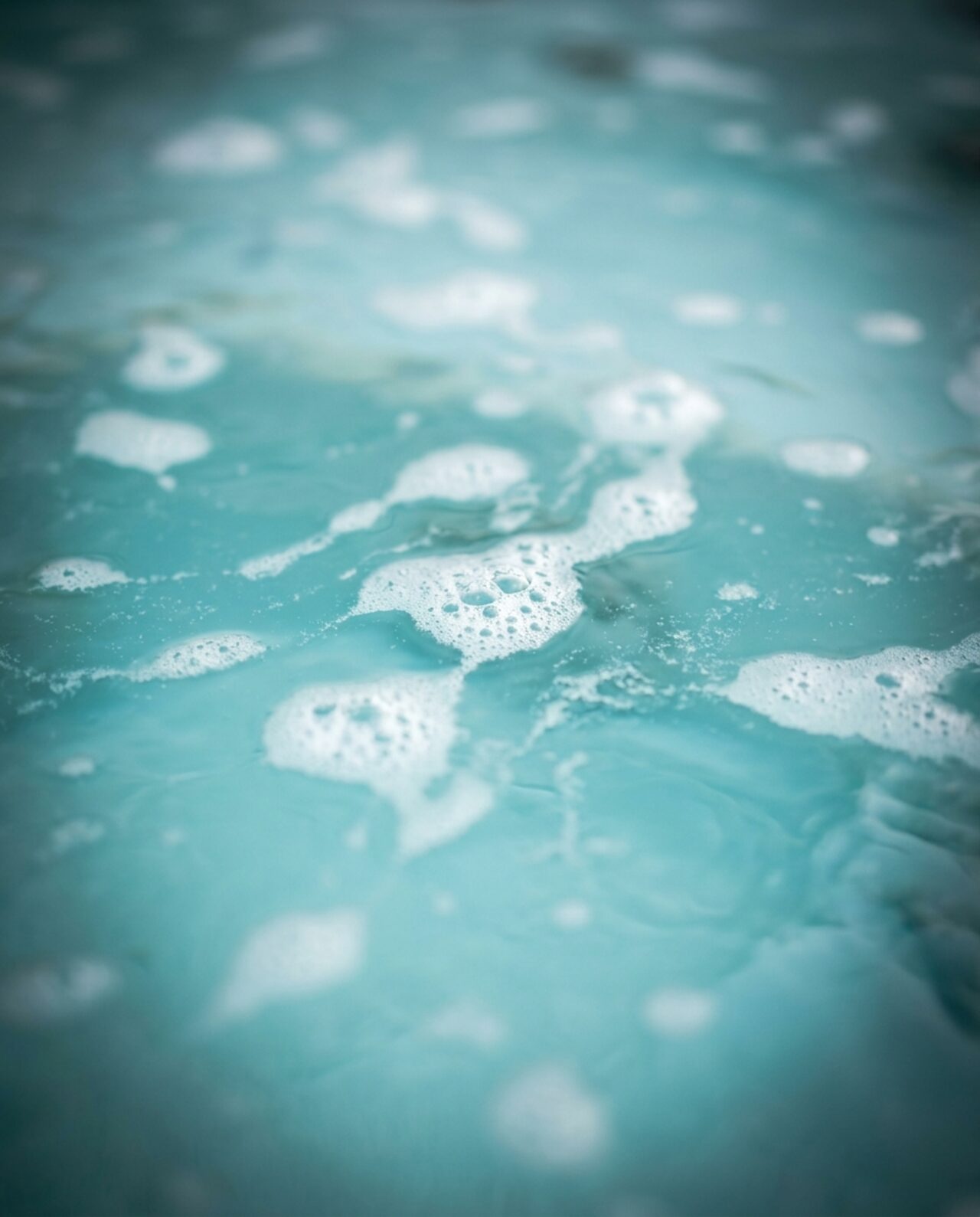
A generated stand-in for detergent and low-calcium foam — the two most common causes at home.
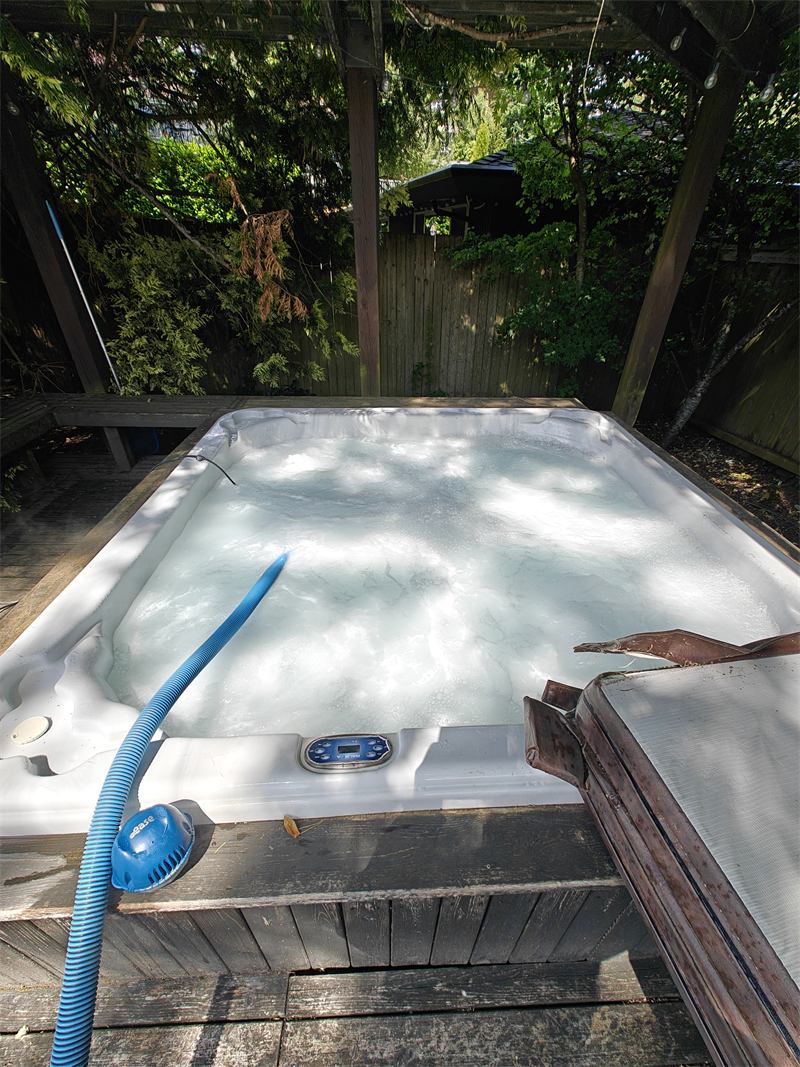
 During purge
After
During purge
After
Purge foam is different
If we just purged your lines, that foam is the plan working.
This is real foam from a real Hot Tub Shine line purge — the deep-clean step that pulls biofilm out of the plumbing before a drain and fill. It's not the same event as the detergent or low-calcium foam described above, and it isn't something you're meant to fix in your own water. It gets drained away, and clean water is what's left.
Fix it today
Five steps, in order.
Foamy water
Fix it yourself
- Identify which of the first three causes you're dealing with. Test calcium hardness first — if it's low, that's a likely primary cause and the fix is different from the other two.
- Short-term only: a capful of defoamer knocks visible foam down for a day or two while you address the real cause.
- Shock with MPS (non-chlorine shock) to burn off the body oils and lotions actually feeding the foam.
- Rinse swimsuits in plain water, not detergent — trace detergent is disproportionately strong foam fuel. Ask guests to rinse off before soaking; it's the single best prevention step available.
- If calcium hardness is low, add calcium hardness increaser per label to bring a standard tub to 150–250 ppm (25–75 ppm on FreshWater Salt systems — don't overshoot that ceiling).
- Chronic foam in water that's more than 3–4 months old means it's drain time — no chemical un-saturates water.
When to call a professional
Recurring foam that comes back within a day or two despite MPS shock, calcium correction, and clean swimsuits is a saturation problem — the water itself needs to go. A Drain & Clean ($349 + tax + trip), which includes a plumbing line purge, resets it completely rather than treating the symptom again. If you're not sure which of the four causes you're looking at, Problem Water Recovery will diagnose it from a text photo before you spend money guessing.
Call/Text 253-468-2888Prevent it from coming back
Keep it from happening again.
- Rinse swimsuits in plain water after every wear instead of laundering with detergent, or keep a dedicated "just for the tub" suit that never sees detergent.
- Ask guests and family to rinse off before soaking — body-product residue is the #1 preventable cause.
- Check calcium hardness monthly, not just when foam shows up — it's easy to let it drift low without noticing until foam appears.
- Track water age and plan drains on a schedule rather than reacting to symptoms; see our upcoming guide on drain frequency once that guide publishes.
When not to soak
Let it collapse before you get in.
FAQ
Foam questions, answered.
Can I use household bleach or dish soap on anything in my hot tub?
Please don't. Bleach damages filters and covers, and even a trace of dish soap or laundry detergent becomes a foam machine at spa temperatures. Use spa-specific filter cleaner, a pH-neutral cover cleaner, and rinse swimsuits in plain water instead of detergent.
Does defoamer actually fix hot tub foam?
No — it collapses existing bubbles for a day or two by breaking surface tension, but does nothing to the body oils, low calcium, or old water actually producing the foam. Treat it as a stopgap, not a solution.
Why is there foam in my hot tub after Hot Tub Shine did a deep clean?
That's purge foam, and it's supposed to happen — it's biofilm leaving your plumbing during the line-purge step, being drained away rather than left in your water. It's a different thing entirely from foam that shows up on its own between visits.
Is foamy hot tub water safe to soak in?
A small amount of foam from jets and body products isn't a health emergency by itself, but dense foam that keeps you from seeing the water clearly or reading a test strip accurately is a sign to hold off soaking until it's addressed and the water is visibly clear.
Back to the full Water Care Guide → · Serving Lake Tapps, WA and the wider South Puget Sound — useful if you manage a vacation rental hot tub, where guest overuse is a common foam trigger.
Rather leave it to us?
Perfect water, zero homework.
Weekly and bi-weekly water care from $80/visit, drain & fill packages, and chemical delivery across the South Sound. This whole guide, done for you — with photo updates available on request.