
Water Care Guide
How to Fix Green Hot Tub Water
Green hot tub water almost always means one of two things: sanitizer dropped to zero and algae moved in, or the water is clear but has a green/brown tint from metals — usually iron, copper, or manganese carried in from well water. Those two look different once you know what to check, and they're fixed in completely different ways. A photo alone can't reliably tell them apart — a test strip can, in under a minute.
Published July 18, 2026 · Reviewed by Hot Tub Shine.
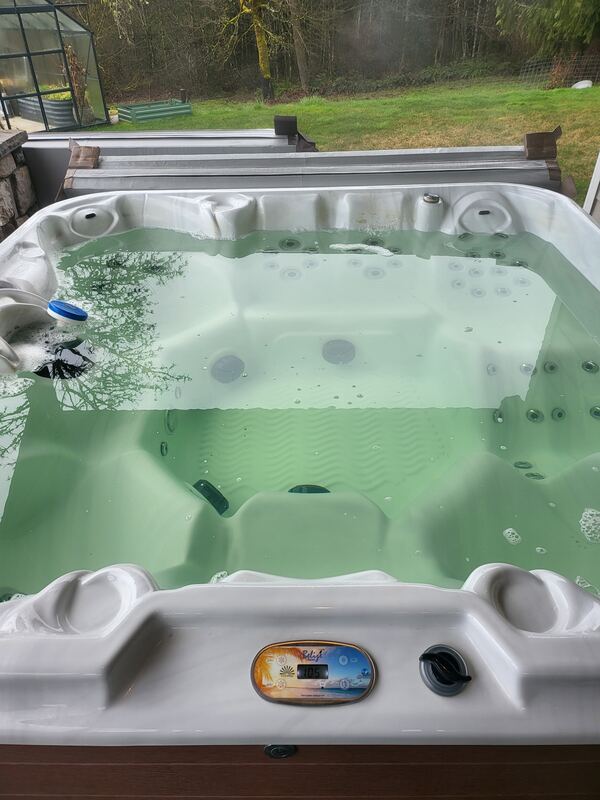
 Before
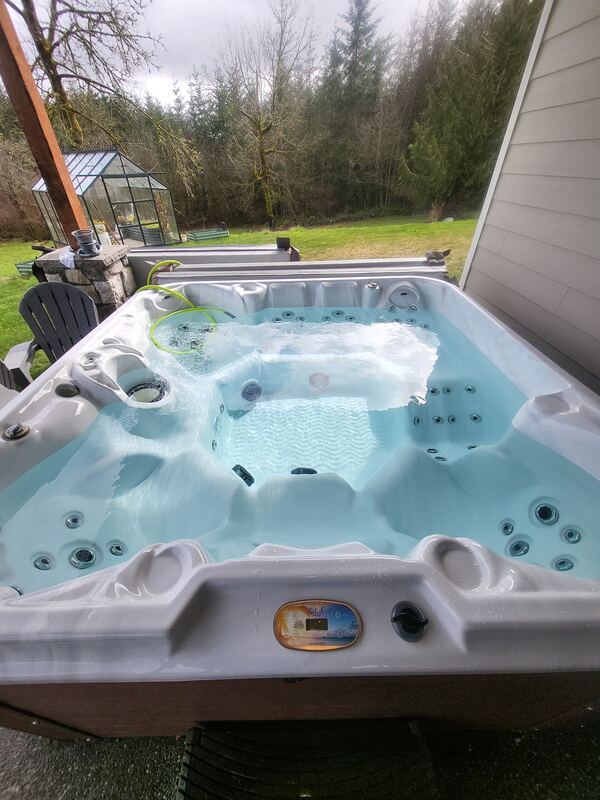
After
Before
After
Why we won't diagnose it from a photo
Algae bloom or metal staining — a test strip is what actually tells you.
Algae bloom (murky, cloudy-green, sometimes with visible slime). Sanitizer's job is to kill organic contamination before it can establish. When free chlorine sits at or near zero for long enough — often after a missed dose, a heavy-use weekend, or a spell of hot weather that burns through sanitizer faster — algae spores that are always present in low numbers get the opening they need to bloom. True algae water is usually murky rather than clear, sometimes with a slick or slimy feel on the shell and behind headrests, and it tends to worsen quickly once it starts.
Metal staining (clear water with a green, brown, or teal tint). Iron, copper, and manganese are common in well water across the South Sound, and even trace amounts can tint hot tub water once they oxidize — copper in particular can turn water a distinct blue-green. Unlike algae, metal-tinted water stays clear; you can usually still see the floor of the tub. This is a water-source issue, not a sanitation failure, and the EPA lists iron, manganese, and similar minerals under its Secondary Drinking Water Standards specifically because of exactly this kind of staining and discoloration, not because they're a health hazard at typical residential well concentrations.
We're being deliberately careful with the language here. Visual color alone is not a certain diagnosis — a photo can suggest which one you're likely looking at, but a sanitizer test strip is what actually confirms it. If free chlorine reads at or near zero, treat it as algae. If sanitizer is holding steady and the water is clear but tinted, treat it as metals. When in doubt, text us a photo alongside your test-strip reading — the combination is what lets us tell you honestly rather than guess from color.

A single-frame stand-in for a green tint — not a diagnosis of algae vs. metals, which a test strip confirms, not a photo.
Fix it today
Two tracks — test first, then follow the one that matches.
If sanitizer tests at or near zero (likely algae)
- Brush the shell, waterline, and behind the headrests to break up any slime before shocking.
- Double-shock with dichlor — about 2 teaspoons per 100 gallons, jets on, cover off.
- Run the pump continuously for 24 hours, then clean or replace the filter — it will be loaded with dead algae after a bloom.
- Re-shock if any green returns within a day; a single dose sometimes isn't enough on a full bloom.
If sanitizer is holding and the water is clear but tinted (likely metals)
- Use a metal sequestrant per label to bind the metals so they don't stain the shell or cloud further.
- At your next fill, use a hose pre-filter to keep new metals from entering with fresh water.
- Don't over-shock clear, tinted water expecting it to change color — sanitizer isn't the fix for a metals problem, and excess shock can actually oxidize dissolved metals into a worse, more visible stain.
When to call a professional
Algae blooming means sanitizer sat at or near zero long enough for it to take hold — which means anything else that needed active sanitizer to be kept in check had the same open door. That's the honest reason a full reset, not just a bigger shock dose, is the safe answer for a confirmed algae bloom: Problem Water Recovery exists specifically for this. If the plumbing has been re-seeding the problem (green returning within days of clearing it), a Drain & Clean with a line purge is what actually stops the cycle — see our upcoming biofilm and jet-line purging guide once that guide publishes for why a plain drain alone can fail.
Call/Text 253-468-2888Prevent it from coming back
Keep it from happening again.
- Never let sanitizer sit at zero for an extended period — test before every soak, and especially after hot weather or a run of heavy use.
- If you're on well water, sequester metals at every fill rather than waiting for a tint to show up.
- Keep a spare, clean filter in rotation so a loaded filter from a past bloom doesn't reseed the next one.
- Watch for the early signs before full-blown green: a slight cloudiness with a faint tint, or sanitizer that "disappears" faster than usual, both point toward an algae bloom starting. Catching it at the cloudy-with-a-tint stage is far easier than a full bloom — see Why Is My Hot Tub Water Cloudy? if that's closer to what you're seeing.
When not to soak
Don't get in while it's green, murky, or slimy.
FAQ
Green water questions, answered.
Will shock alone fix green hot tub water?
Sometimes, temporarily — but if it returns within a few days, sanitizer alone isn't reaching the actual source, and a full reset (drain, purge, refill) is what actually ends the cycle instead of just delaying it.
How can I tell if my green water is algae or just metal staining?
Test your sanitizer first. If free chlorine reads at or near zero, treat it as algae — that's the classic cause-and-effect. If sanitizer is holding steady in range and the water is clear (not murky) but tinted green, brown, or teal, metals from well water are the more likely cause. A photo alone can't confirm which one you have; the test strip can.
Is green hot tub water dangerous?
Algae growth generally means sanitizer was too low to control organic contamination for some period of time, which is the same condition that lets bacteria establish — so treat confirmed algae water as a "don't soak" situation until it's fully reset and re-tests clean, not just a cosmetic issue.
Why does my hot tub keep turning green after I shock it?
Recurring green water after shocking usually means the source hasn't actually been removed — either the filter is still loaded with dead algae, or biofilm in the plumbing is re-seeding the water each time it looks clear. A drain, filter change, and line purge address the actual source instead of repeating the same shock cycle.
Sourced against U.S. EPA Secondary Drinking Water Standards and CDC Healthy Swimming guidance. Back to the full Water Care Guide → · Serving Tacoma, WA and the wider South Puget Sound.
Rather leave it to us?
Perfect water, zero homework.
Weekly and bi-weekly water care from $80/visit, drain & fill packages, and chemical delivery across the South Sound. This whole guide, done for you — with photo updates available on request.