
Water Care Guide
Hot Tub Odor That Keeps Coming Back
A hot tub smell is almost always one of two things, and they mean the opposite of what most people assume: a sharp, "chlorine-pool" smell usually means you have too little effective sanitizer, not too much — and a musty, sour, or dirty-sock smell almost always points to bacteria or biofilm in the plumbing, not the water itself. The fix for the first is more sanitizer. The fix for the second is a plumbing purge, not more chemicals in the water.
Published July 18, 2026 · Reviewed by Hot Tub Shine.
What's actually causing it
Two odor families, opposite fixes.
The sharp "chlorine" smell = chloramines, not too much chlorine. This is one of the most counterintuitive facts in water care, and it's directly confirmed by the CDC: what people smell as "too much chlorine" at a pool or spa is actually chloramines — the byproduct created when chlorine reacts with body oils, sweat, cosmetics, and other organic material in the water. According to the CDC's Healthy Swimming program, chloramines are what irritate eyes, skin, and airways, and a strong chemical smell is a sign that chlorine has been used up fighting contamination and needs to be replenished, not reduced. A properly sanitized tub with fresh, adequate chlorine barely smells at all.
The musty, sour, or "dirty sock" smell = bacteria or biofilm. This smell doesn't come from too much or too little sanitizer in the water you're testing — it comes from a microbial layer growing inside the jet plumbing itself, somewhere chemistry in the tub can't reach. It often shows up even when your test strip reads perfectly balanced, because the source isn't in the water column at all. This is the same biofilm mechanism our upcoming biofilm and jet-line purging guide covers in more depth once that guide publishes — and it's the reason this particular smell tends to return within days of a plain drain and refill that never touched the pipes.
A smell alone doesn't tell you how severe the problem is. Both odor families can range from faint to strong depending on how long the underlying cause has been building, and neither is something to self-diagnose a specific illness from. Treat a persistent or worsening smell as a signal to test and act, not as proof of a particular condition.
How to tell which one you have, quickly:
- Test free chlorine. If it reads low or near zero and the smell is sharp/chemical, it's chloramines — you need to add sanitizer, not avoid it.
- If chlorine tests fine (or even high) and the smell is musty or sour rather than sharp, suspect biofilm in the plumbing instead of anything you can fix by dosing the water.
- If you shock the water and the sharp smell disappears but a lingering musty note remains, that's a strong sign both are present — chloramines were masking a biofilm smell underneath.

A generated stand-in — odor itself can't be photographed, so this doesn't assert a specific cause.
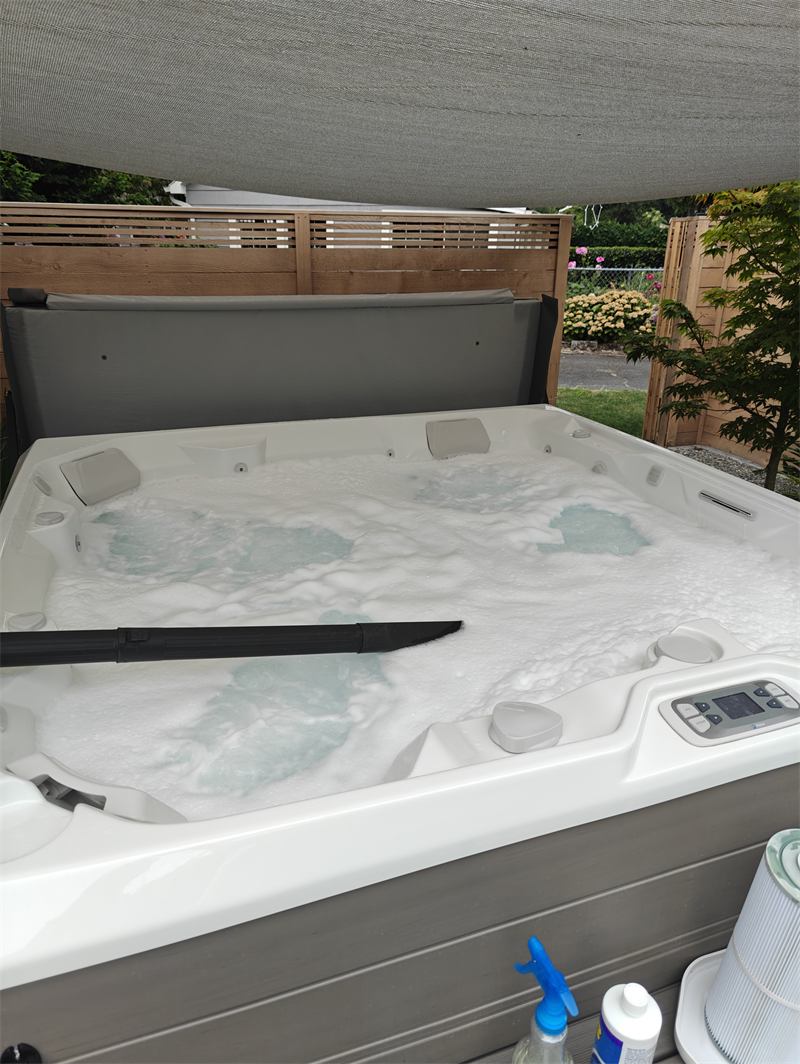
 During purge
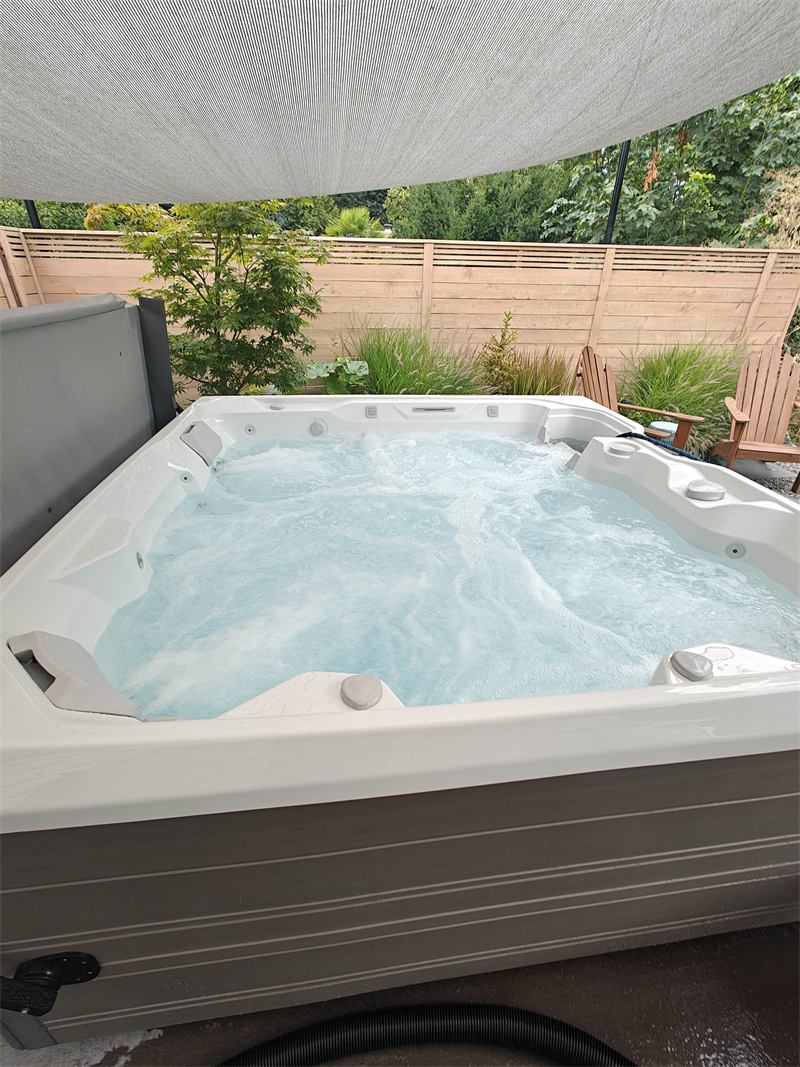
After
During purge
After
Where the musty smell actually lives
The same purge that removes biofilm is what clears a musty smell.
This is real foam from a real Hot Tub Shine jet-line purge — the deep-clean step that pulls biofilm out of the plumbing. A musty or dirty-sock smell almost always traces back to exactly this: a microbial layer inside the lines that chemistry in the water can't reach. Once it's purged out and drained away, the smell goes with it — no amount of dosing the tub gets there on its own.
Fix it today
Two tracks — match the smell to the fix.
For a sharp/chemical smell (chloramines)
- Test free chlorine — a smelly tub usually reads low.
- Shock with dichlor, jets on, cover off so the odor and off-gassing chloramines can actually leave the water instead of building up under a closed cover.
- Rinse the filter — it holds odor-causing organic gunk that keeps demanding sanitizer.
- Leave the cover open for 30–60 minutes after shocking to let it fully air out.
For a musty/sour smell (suspected biofilm)
- Confirm chemistry is actually in range first — if it is, and the smell persists, it's very unlikely to be a dosing problem.
- A one-time DIY line-purge product can sometimes reduce a mild case, but it will not remove biofilm as thoroughly as a professional purge reaches the full plumbing loop.
- If the smell returns within days of a plain drain and refill, that confirms the plumbing itself is the source.
When to call a professional
A persistent musty or dirty-sock smell that survives correct chemistry and a full shock cycle lives in your plumbing, not your water — no amount of dosing the tub reaches it. A Drain & Clean ($349 + tax + trip) with a jet-line purge removes it at the actual source, rather than repeating a shock cycle that never touches the real cause. If you're not sure which odor family you're dealing with, or the smell keeps returning after you've tried the DIY steps above, Problem Water Recovery will help you figure out which one it actually is before you spend money guessing.
Call/Text 253-468-2888Prevent it from coming back
Keep it from happening again.
- Keep sanitizer in range consistently rather than letting it run low between soaks — chloramine smell is a direct symptom of chlorine demand outpacing supply.
- Rinse the filter weekly; a loaded filter both smells and increases the sanitizer demand that produces chloramines in the first place.
- Purge the plumbing on a regular schedule (the hub's quarterly care-rhythm checklist includes this) rather than waiting for a musty smell to confirm biofilm has already established.
- Leave the cover cracked open briefly after any heavy chemical dose so off-gassing chloramines actually leave the water instead of building up under a sealed cover.
When not to soak
Wait until you've confirmed the cause.
FAQ
Odor questions, answered.
Why does my hot tub smell like chlorine if the chlorine reading is low?
That sharp smell is chloramines — chlorine that's already been used up reacting with body oils and other contamination — not too much chlorine. The CDC's Healthy Swimming program confirms this is the source of the classic "pool smell." The fix is counterintuitive: add sanitizer or shock to burn off the spent chlorine, rather than avoiding it. Properly sanitized water with adequate fresh chlorine barely smells at all.
What does a musty or dirty-sock smell in a hot tub mean?
That points to bacteria or biofilm growing inside the jet plumbing rather than anything wrong with the water you're testing — which is why it can show up even when your chemistry reads perfectly balanced. It usually needs a professional line purge to fully resolve, since it lives somewhere routine dosing can't reach.
I shocked my hot tub and it still smells musty — what now?
If chemistry is confirmed in range and a musty smell persists (or returns within days of a plain drain and refill), the source is very likely biofilm in the plumbing, not the water itself. A drain & clean that includes a jet-line purge addresses that directly.
Is hot tub odor a health concern?
A smell alone isn't a reliable measure of how serious a water problem is, so don't use it to self-diagnose. Treat a persistent or worsening odor — of either kind — as a reason to test and act rather than ignore, and avoid soaking until you've confirmed chemistry is correct and, if the smell persists, had the plumbing addressed.
Sourced against CDC Healthy Swimming guidance on chloramines and pool/spa operation. Back to the full Water Care Guide → · Serving Tacoma, WA and the wider South Puget Sound.
Rather leave it to us?
Perfect water, zero homework.
Weekly and bi-weekly water care from $80/visit, drain & fill packages, and chemical delivery across the South Sound. This whole guide, done for you — with photo updates available on request.